
Korea's Secret Weapon in Beauty Tech: It's Not About More Doctors
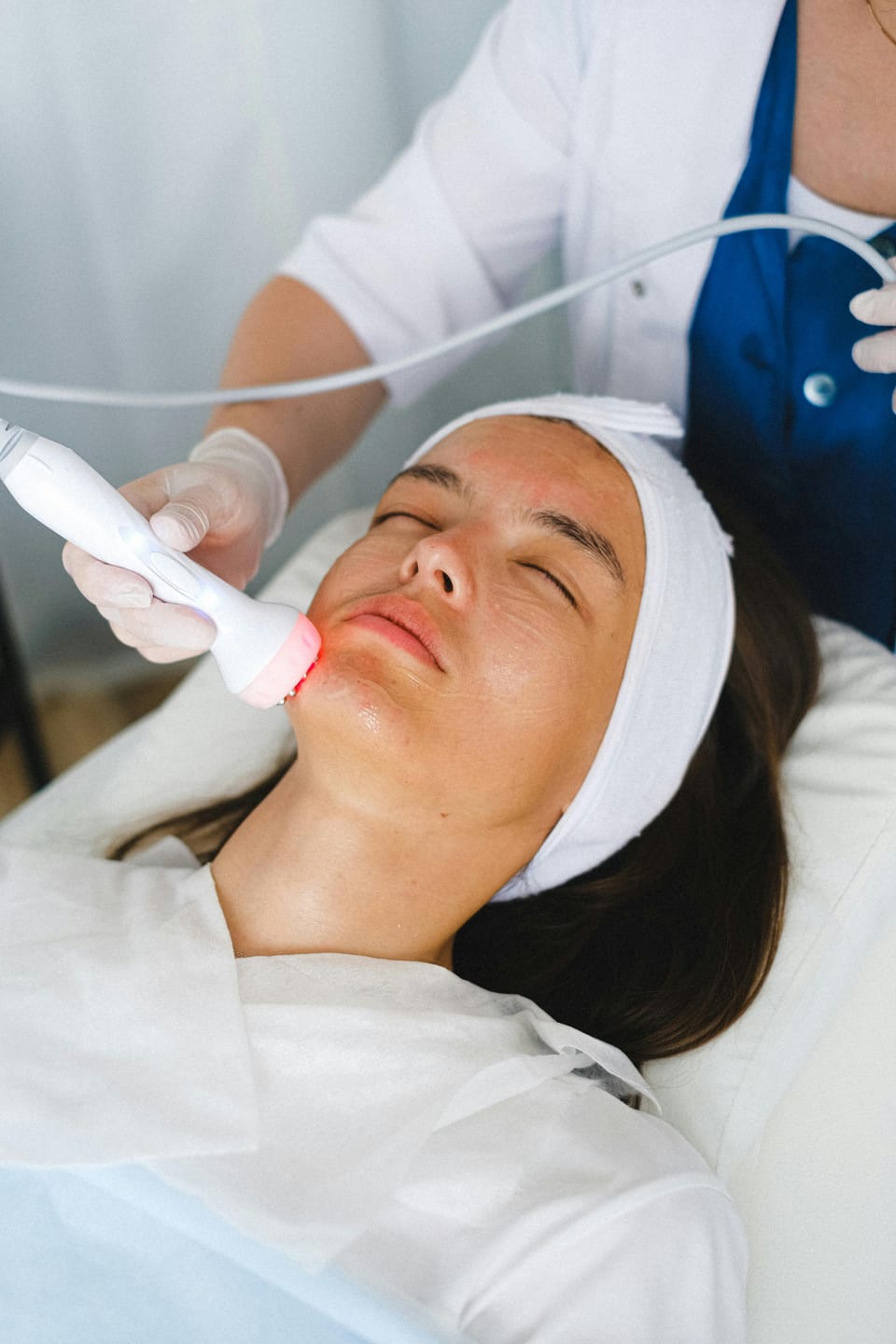
You've probably heard about K-Beauty—the sheet masks, the 10-step routines, the glass skin phenomenon. But there's another Korean beauty revolution happening that most people don't know about, and it's transforming aesthetic medicine worldwide.
The Billion-Dollar Question
Here's a surprising fact: Greece has more dermatologists per capita than almost any country in the world. So why isn't Athens the global capital of aesthetic medicine? Why are over 1.1 million medical tourists flocking to Seoul instead?
The answer isn't about how many doctors a country has. It's about what those doctors have access to.
Welcome to the Future: Gangnam's Tech Revolution
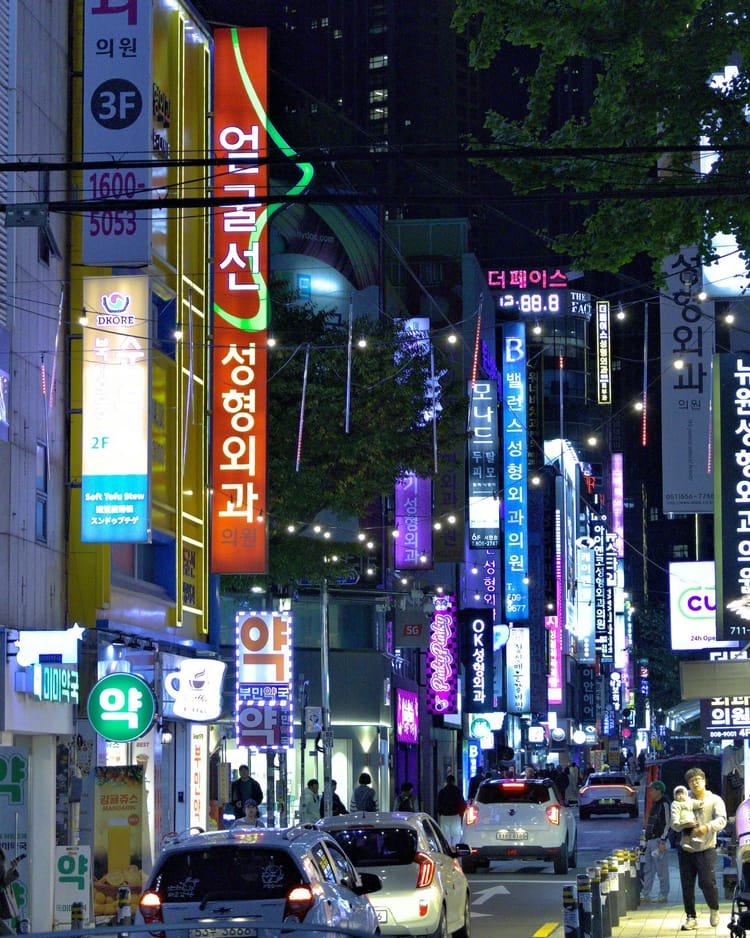
Walk through the gleaming corridors of any major aesthetic clinic in Gangnam or Busan, and you'll immediately notice something different. The sheer amount of equipment is staggering. While a typical Western dermatology practice might have one or two laser devices, Korean clinics routinely house 15-20 different machines—each serving a specific purpose.
The Global Baseline: Dermatologist Density
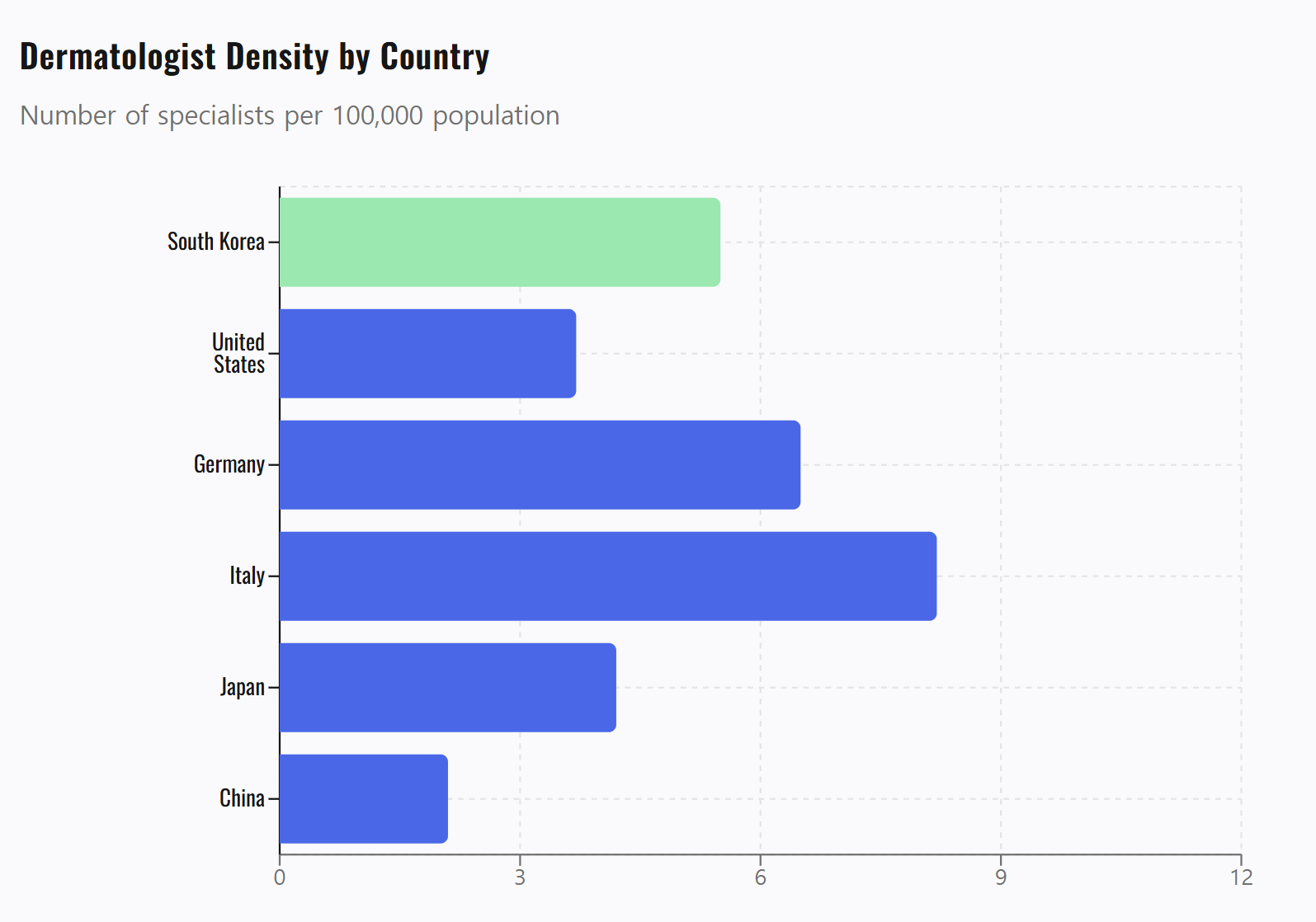
When we look at specialists per 100,000 people:
- Greece leads at 11.4
- Italy follows with 8.2
- South Korea sits at 5.5
But here's where it gets interesting: South Korea's relatively modest number of dermatologists operate in hyper-specialized "aesthetic clusters" where the device-to-doctor ratio is 3-4 times higher than anywhere else in the world.
Think of it this way: it's not about having more artists—it's about giving each artist a full palette of colors to work with.
The Numbers Behind the Phenomenon
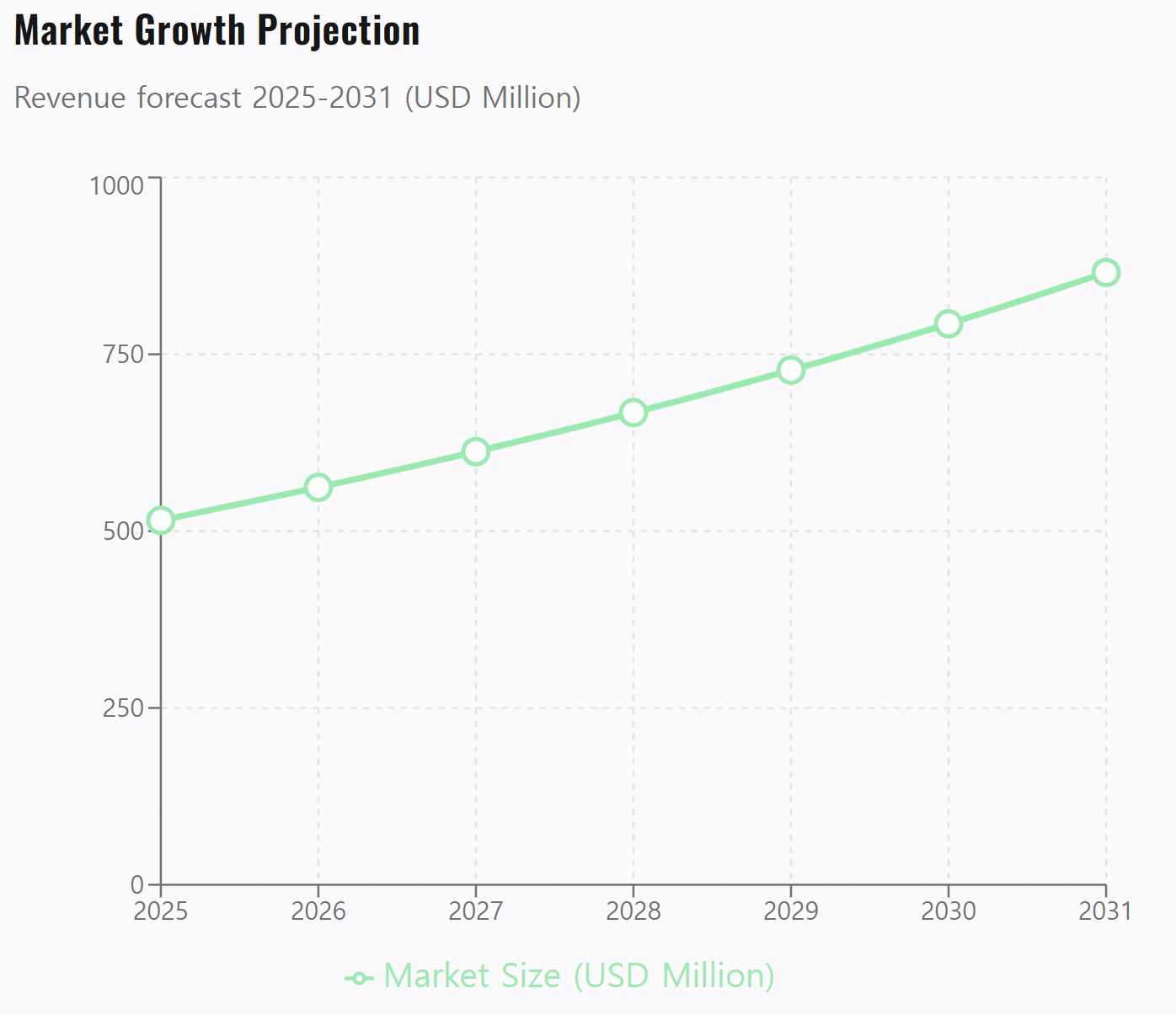
South Korea's aesthetic device market isn't just growing; it's exploding. From $520 million in 2025, it's projected to nearly double to $950 million by 2031. That's a compound annual growth rate of over 10%.
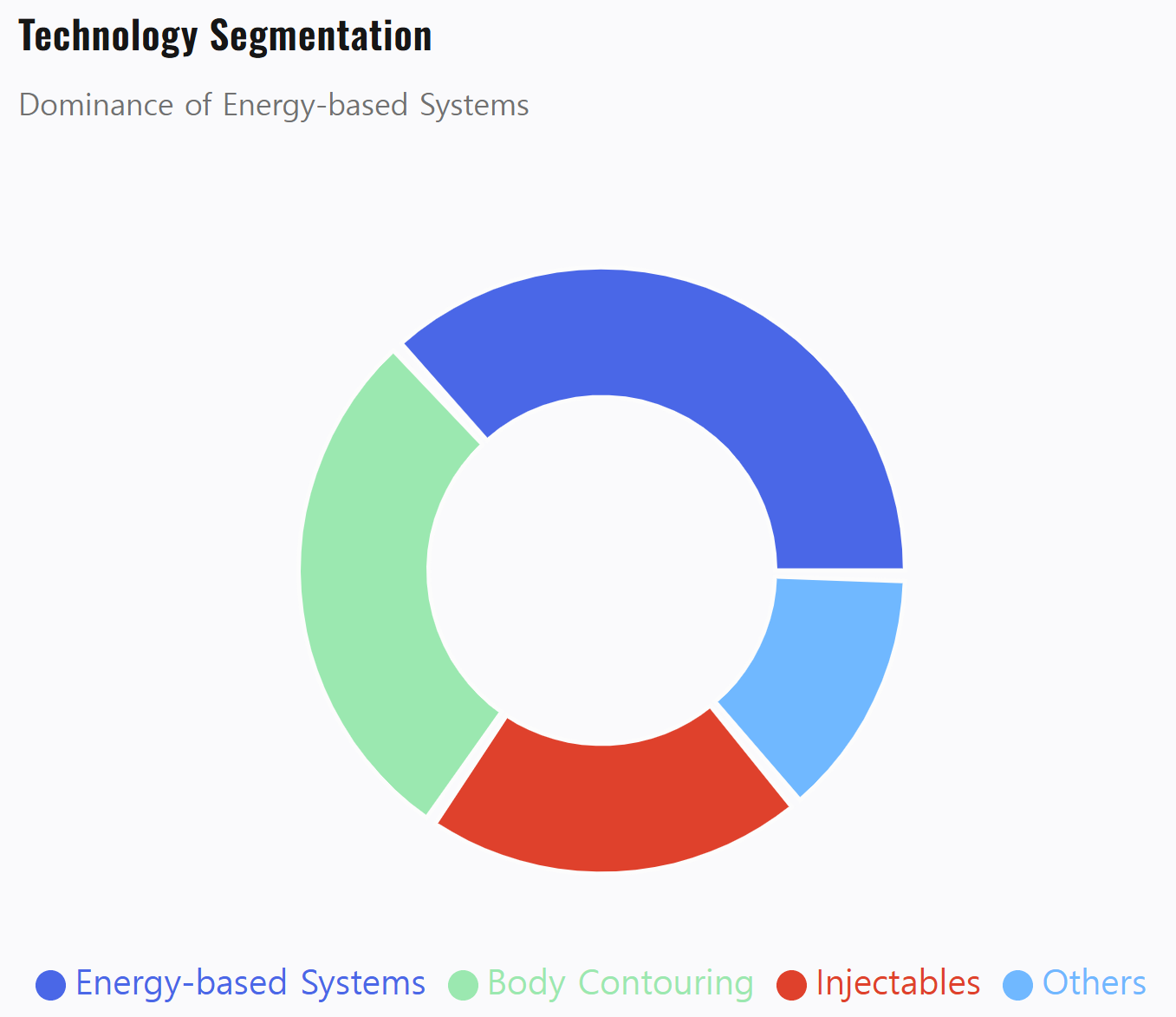
What's driving this growth?
Nearly 40% of the market is energy-based systems—lasers, radiofrequency devices, and ultrasound machines. Unlike injectable treatments that get used up, these represent major capital investments. And here's the kicker: Korean clinics typically upgrade their flagship laser systems every 24 months.
Yes, every two years.
This creates what industry insiders call the "innovation treadmill." To stay competitive in Seoul's cutthroat aesthetic market, clinics must constantly adopt the latest technology. This relentless demand drives manufacturers to innovate at a pace Western markets simply can't match.
Does More Tech Actually Mean Better Skin?
It's a fair question. After all, having fancy equipment means nothing if it doesn't produce results.
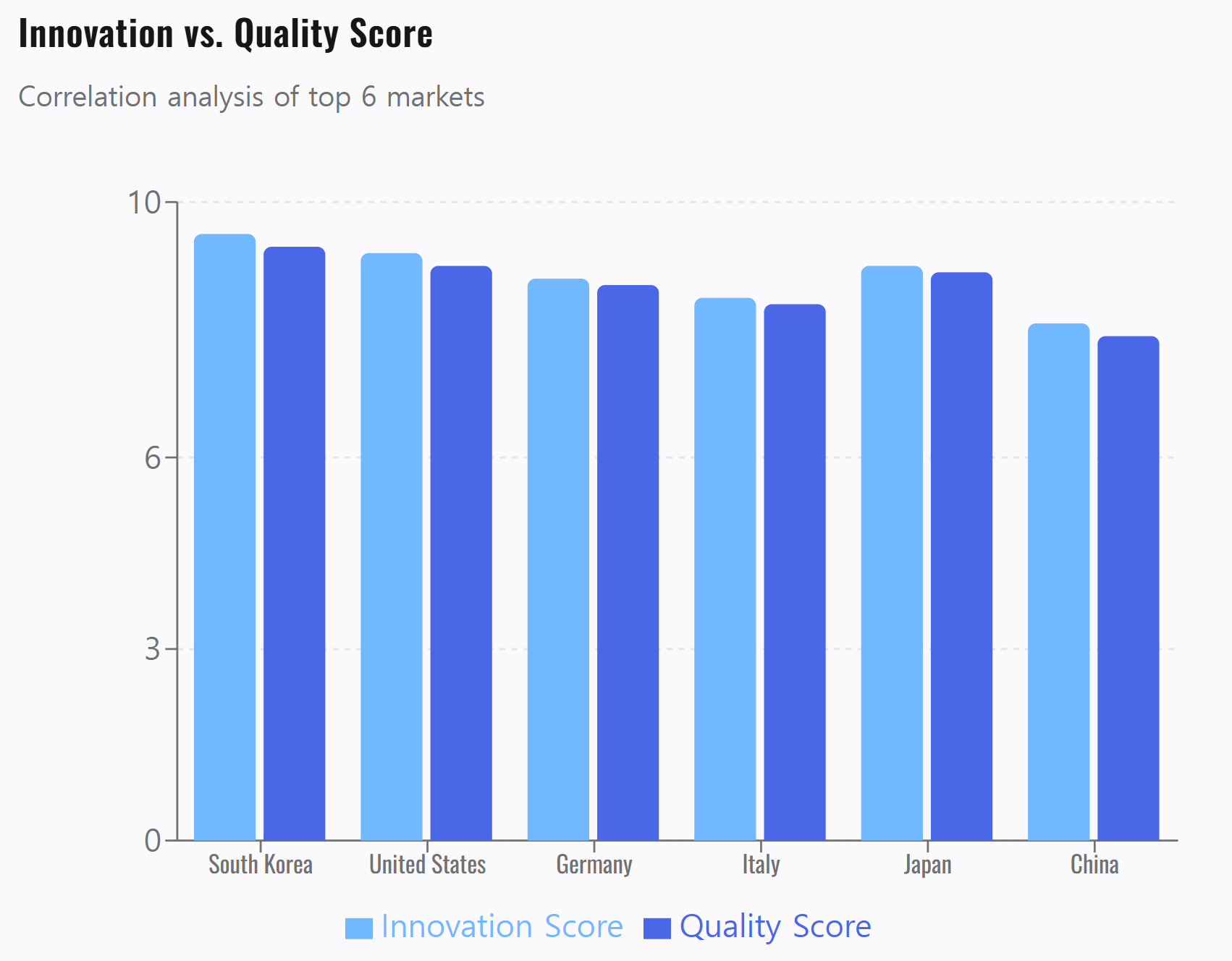
The data suggests a strong correlation. When we analyze innovation scores against treatment quality outcomes across major markets, South Korea leads in both categories—scoring 9.5 for innovation and 9.3 for treatment quality.
What makes Korean treatments different?
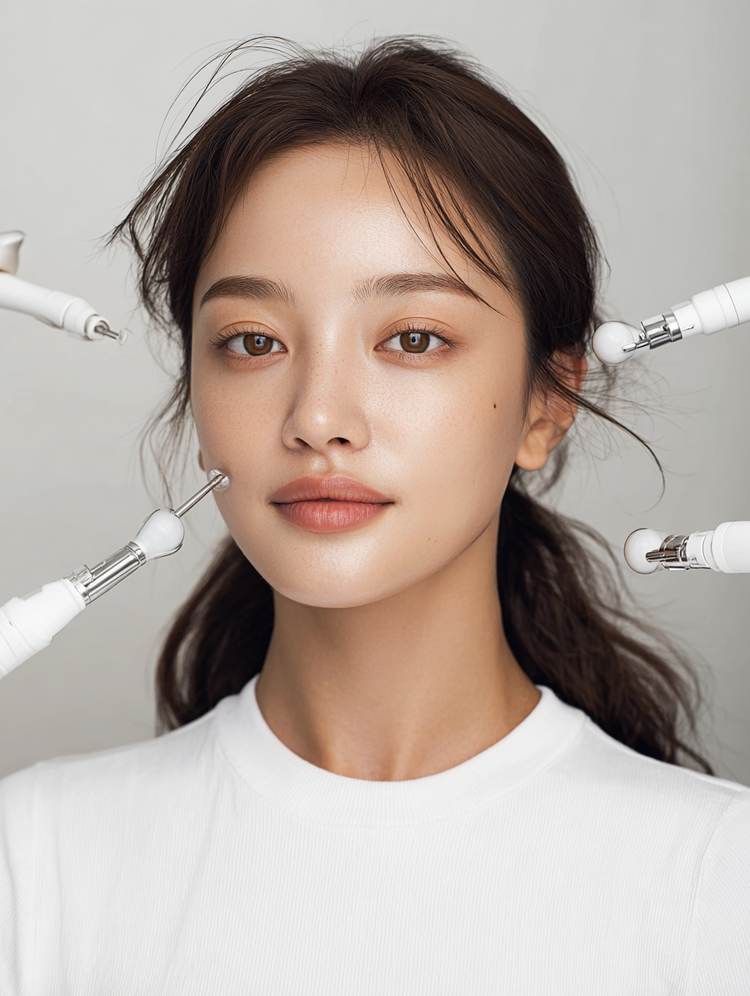
Modern Korean aesthetic devices aren't just powerful—they're smart. The latest generation uses AI to analyze skin impedance in real-time, automatically adjusting energy levels to maximize results while minimizing downtime. It's precision medicine applied to aesthetics.
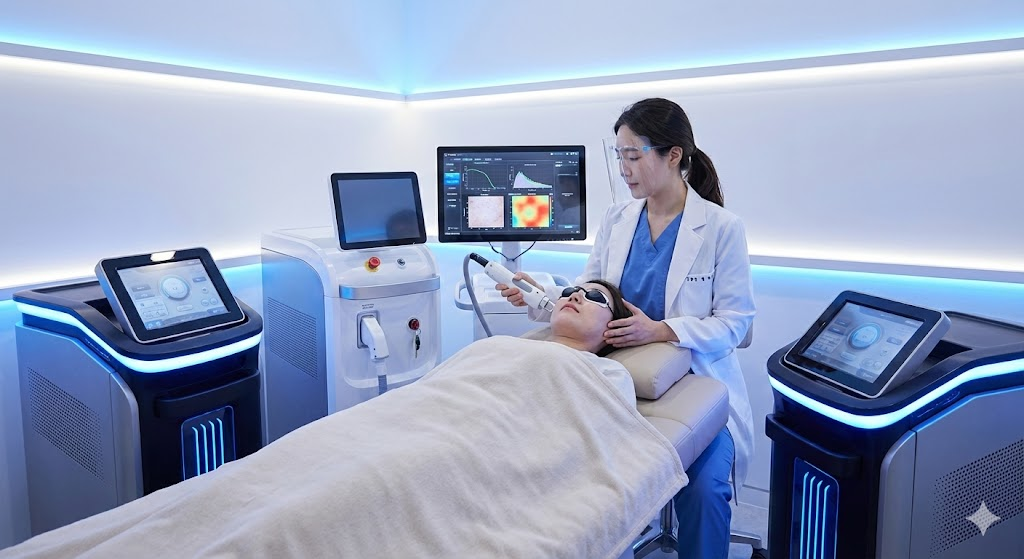
This technological density enables what Korean doctors call "stacking treatments." In a single session, a patient might receive five or more different modalities—microneedling, laser resurfacing, radiofrequency tightening, LED therapy, and a regenerative treatment. This multi-pronged approach is rare in Western clinics, simply because most don't have access to this range of equipment.
The Medical Tourism Magnet
The result? South Korea has become the aesthetic medicine destination of choice for patients worldwide. The country attracted 1.1 million medical tourists in 2024, with many specifically seeking dermatological and aesthetic procedures unavailable or prohibitively expensive in their home countries.
A patient from Singapore or Dubai can fly to Seoul, receive multiple advanced treatments in a single week-long trip, and still spend less than they would for comparable (if available) treatments at home.
What This Means for the Future of Aesthetic Medicine
South Korea's model represents a fundamental shift in how we think about aesthetic care. It's moved beyond the traditional doctor-patient relationship to create an ecosystem where:
- Technology drives innovation cycles
- Competition accelerates advancement
- Accessibility increases through efficiency
- Outcomes improve through precision
As one Seoul-based dermatologist put it: "We don't just treat skin problems anymore. We engineer skin improvement with the precision of a semiconductor factory."
And in a country that built its modern economy on semiconductor manufacturing, that's not just a metaphor—it's a philosophy.
The Takeaway
While the rest of the world debates whether to add another dermatologist to the roster, South Korea answered a different question: what if we armed each doctor with an arsenal of cutting-edge technology and let innovation run wild?
The results speak for themselves. The question now isn't whether other countries will follow Korea's model—it's how quickly they can catch up.
All market data represents 2024-2025 analysis. Treatment outcomes may vary. Always consult with qualified medical professionals before undergoing aesthetic procedures.
#KBeauty #AestheticMedicine #MedicalTourism #Dermatology #SouthKorea #Seoul #SkinCareInnovation #MedicalDevices #LaserTreatment #SkinTech #HealthTech #GangnamSkinClinic #AestheticTechnology #PrecisionMedicine #KBeautyIndustry #SkinCareRoutine #MedicalExport #InnovationTreadmill #KoreanDermatology #FutureOfBeauty #BeautyInvestment
Comments ()